Book of the Week:
 Murder at the Grand Alpine Hotel by Lucy Foley
The year 1950 finds Miss Jane Marple, everyone’s favorite spinster, vacationing in the Swiss Alps. Murder soon follows. And why not? After all, Agatha Christie already took Miss Marple from the village of Much Benham to London and the Caribbean and staged mysterious deaths for her to solve. But Foley complicates this sequel in several ways that will leave Christie fans gaping. It’s hard to believe Miss Marple and her recently widowed friend Dolly Bantry, who memorably discovered the body in the library back in 1942, would seek pleasure on a chilly mountaintop, even if the destination were suggested by Diana Glass, Mrs. Bantry’s companion. In addition, Foley parcels out the story among four narrators: Catherine Narracott, the much younger wife of ambitious Tory Member of Parliament Anthony Narracott; Bruno Crane, Anthony’s wartime comrade in arms, who pops up out of nowhere bent on mischief; Hollywood star Sylvia Sinclair, who establishes her American credentials by calling everyone sweetheart, honey, or baby; and Diana herself. The rapid shifts among the leading suspects when Anthony Narracott is predictably killed, along with an accident that even more predictably cuts off the Grand Alpine Hotel from the authorities and the rest of the world, sadly upstage Miss Marple, who’d be the first to note she’s not one to take charge. Readers who persevere to the big reveal will discover that the mystery has been adroitly plotted and intricately clued, with a solution that will surprise many of them—providing compelling evidence against Raymond Chandler’s famous dictum that the ideal mystery is one you’d read even if the end were missing.
Barry's Picks
 The Rolling Stones by Bob Spitz
All great music is a threat.
What left is there to say about The Rolling Stones? A hell of a lot, it turns out.
Bob Spitz has brought his indefatigable energy and five decades of experiences in the fields and hollows of rock 'n’ roll to bear on his five-year journey to reexamine one of popular music’s greatest stories. There are myriad revisions to the conventional narrative which underscore just how in control of that narrative the band has been up to now—small example: no, Muddy Waters was not mopping the floors at Chess Records when the Stones showed up. But in a larger sense, as with the Beatles and Led Zeppelin, Spitz’s greatest gift is for the big picture. He knows where the magic is, and why it is. He is as clear-eyed a connoisseur of the show business, the spectacle and the collateral damage of this whirlwind as anyone alive, and that lucid gaze pierces a lot of incrusted bullshit, but the ultimate goal is to connect with a creative force whose power shows no signs of fading, over sixty years on. At its heart the story is about two boys, Mick and Keith, and their unique, fraught, alchemical bond, often tested, never sundered. The Glimmer Twins. The bandmates, like Charlie Watts, who found their groove in relation to this double star made the trip intact, while those who struggled, like Brian Jones and Mick Taylor, were chewed up and spit out. This is a story with many dark corners, including a surprising number of deaths. But whether Jagger and Richards sold their souls to the devil is at the crossroads for blues greatness or just squeezed their heroes for every drop of inspiration, in the end their connection to their music and to each other put them in a category of one, where they very much remain.
 Crossing the Wine-Dark Sea by Emily Wilson
Enchanting, academic essays about translating the classics. Balancing close readings of nuanced passages alongside celebrations of their modern translations, Wilson (classical studies/University of Pennsylvania; The Iliad, 2023, etc.) writes with the sparkling charisma of a favorite college professor and presents each deep dive with a finely tempered fusion of erudition and accessibility. “Language is never a neutral tool by which we represent the world: every word and phrase carries with it a tangle of cultural assumptions and connotations,” she writes and slyly incorporates contemporary touchstones into her analyses. In the essay “Slut-Shaming Helen of Troy,” Wilson explores misogynistic tropes and the Helen myth’s “focus on the proliferation of virtual, unreal images that suck people into obsessive desire and conflict.” Another essay probes the bawdier side of classics and connects the “lyrical flow” of Aristophanes to Megan Thee Stallion and Cardi B. While discussing Edith Hamilton’s popular retelling of the Greek myths, Wilson moves quickly past Hamilton’s scholarly shortcomings and instead applauds her ability to “[fuse] a schtick about classics with something more nebulous and hard to achieve: a Personality.” Personality is where Wilson, too, finds great success. She not only imparts the wisdom of a well-read scholar but shows readers how easy it is to bask in these texts’ storied histories and revel in their slippery wordplay. She welcomes the unique visions of a swath of other translators and gracefully finds value in both their successes and misfires. The collection closes with a long essay about her own translations of Homer and the challenge of “shedding new light on a supposedly familiar original,” exemplified by her maligned use of the word “complicated” to describe Odysseus and his meandering adventures. “[J]ust as there are many ways to play a single score of music, many ways to paint the same landscape, and many ways to direct a play or deliver a speech,” Wilson reveals the multifaceted artistry of translation, rendered in an amalgam of both language and history.
 A Thousand Ships by Natalie Haynes
This is the women’s war, just as much as it is the men’s. They have waited long enough for their turn . . .
This was never the story of one woman, or two. It was the story of them all . . .
In the middle of the night, a woman wakes to find her beloved city engulfed in flames. Ten seemingly endless years of conflict between the Greeks and the Trojans are over. Troy has fallen.
From the Trojan women whose fates now lie in the hands of the Greeks, to the Amazon princess who fought Achilles on their behalf, to Penelope awaiting the return of Odysseus, to the three goddesses whose feud started it all, these are the stories of the women whose lives, loves, and rivalries were forever altered by this long and tragic war. A woman’s epic, powerfully imbued with new life, A Thousand Ships puts the women, girls and goddesses at the center of the Western world’s great tale ever told.
 Blow by Blow the Jeff Beck Story by Brad Tolinkski & Chris Gill
The blazing virtuosity and career missteps of the most galvanizing of British blues-rock guitarists. Nobody played guitar quite like Jeff Beck (1944-2023), and fans say no rock guitarist has ever played better. After sharing a stage with him, his onetime rival Eric Clapton said, “I began to think of Jeff as probably being the finest guitar player I’d ever seen. … I still think that way. … There’s something cool and mean about Becky that beats everyone else.” Beck, Clapton, and Led Zeppelin’s Jimmy Page will forever be linked as guitarists who achieved early acclaim in the mid-’60s with the Yardbirds, but Beck on his own never achieved their level of commercial success. He didn’t develop into much of a singer or songwriter, had trouble keeping his bands together, and had a reputation for being difficult and unreliable. He changed direction often, on impulse, zigzagging through hard rock, rockabilly, funk, fusion, and electronica, while doing guest-star sessions with a range of stars. This biography by music journalists Tolinski and Gill balances an appreciation for Beck’s talents with a recognition that he was often his own worst enemy. He did one thing well: He played guitar. But he had trouble communicating with bandmates, articulating what he wanted, and where he was aiming. He needed strong collaborators, material, management, producers; he often didn’t get them. After being fired by the Yardbirds, he formed the first iteration of the Jeff Beck Group, teaming with the then-little-known Rod Stewart and establishing a blueprint that heavy metal and Led Zeppelin in particular would follow. While Zeppelin soared, Beck’s group splintered, largely over finances and credit. From there, the options he bypassed as recounted in the biography are more fascinating than the ones he took—more creative collaboration with Stevie Wonder (who wrote “Superstition” for Beck), the possibility of joining the Rolling Stones or Elton John’s band, a session with Motown studio stalwarts that sent nowhere, a teaming with Sly Stone as producer, and so many others.
 The World of Sherlock Holmes by Andrew Lycett
Patty's Picks
 The London Seance Society by Sarah Penner
1873 At an abandoned château on the outskirts of Paris, a dark séance is about to take place, led by acclaimed spiritualist Vaudeline D’Allaire. Known worldwide for her talent in conjuring the spirits of murder victims to ascertain the identities of the people who killed them, she is highly sought after by widows and investigators alike. Lenna Wickes has come to Paris to find answers about her sister’s death, but to do so, she must embrace the unknown and overcome her own logic-driven bias against the occult. When Vaudeline is beckoned to England to solve a high-profile murder, Lenna accompanies her as an understudy. With shared determination, the women find companionship that perhaps borders on something more. And as they team up with the powerful men of London’s exclusive Séance Society to solve the mystery, they begin to suspect that they are not merely out to solve a crime, but perhaps entangled in one themselves…
Written with intoxicating suspense and sultry prose, The London Séance Society is an entrancing tale that blurs the lines between truth and illusion, and reveals the grave risks women will take to avenge the ones they love.
 Romancing Mr. Bridgerton by Julia Quinn
Penelope Featherington has secretly adored her best friend’s brother from afar for forever—until she stumbles across Colin Bridgerton’s deepest secret and fears she doesn't know him at all. Meanwhile, Colin is tired of his reputation as an empty-headed charmer and of the notorious gossip columnist Lady Whistledown. Upon his return to London, he discovers everything has changed—especially Penelope Featherington! The girl who was always simply there suddenly haunts his dreams.
When he discovers that Penelope has secrets of her own, this elusive bachelor
must decide . . . is she his biggest threat or his promise of a happy ending?
 Christine by Stephen King
It’s love at first sight for high school student Arnie Cunningham when he and his best friend Dennis Guilder spot the dilapidated 1958 red-and-white Plymouth Fury for sale—dubbed “Christine” by its original cantankerous owner—rusting away on a front lawn of their suburban Pennsylvania neighborhood. Dennis knows that Arnie’s never had much luck in the popularity department or really taken an interest in owning a car…but Christine quickly changes all that.
Arnie suddenly has the newfound confidence to stick up for himself, going as far as dating the most beautiful girl at Libertyville High—transfer student Leigh Cabot—even as a mysteriously restored Christine systematically and terrifyingly consumes every aspect of Arnie’s life. Dennis and Leigh soon realize that they must uncover the awful truth behind a car with a horrifying and murderous history. Hell, hath no fury like a woman scorned, and heaven help anyone who gets in Christine’s way…
 Road to Ruin by Hana Lee
Jin-Lu has the most dangerous job in the wasteland. She’s a magebike courier, one of the few who venture outside the domed cities on motorcycles powered by magic. Every day, she braves the wasteland’s dangers—deadly storms, roving marauders, and territorial beasts—to deliver her wares.
Her most valuable cargo? A prince’s love letters addressed to Yi-Nereen, a princess desperate to escape the clutches of her abusive family and soon-to-be husband. Jin, desperately in love with both her and the prince, can’t refuse Yi-Nereen’s plea for help. The two of them flee across the wastes, pursued by Yi-Nereen’s furious father, her scheming betrothed, and a bounty hunter with mysterious powers. A storm to end all storms is brewing and dark secrets about the heritability of magic are coming to light. Jin’s heart has led her into peril before, but this time she may not find her way back.
Amie's Picks
 I'm Afraid You've Got Dragons by Peter S. Beagle
Dragons are common in the backwater kingdom of Bellemontagne, coming in sizes from mouse-like vermin all the way up to castle-smashing monsters. Gaius Aurelius Constantine Heliogabalus Thrax (who would much rather people call him Robert) has recently inherited his deceased dad's job as a dragon catcher/exterminator, a career he detests with all his heart in part because he likes dragons, feeling a kinship with them, but mainly because his dream has always been the impossible one of transcending his humble origin to someday become a prince's valet. Needless to say, fate has something rather different in mind...
 The Listeners by Maggie Stiefvater
January 1942. The Avallon Hotel & Spa has always offered elegant luxury in the wilds of West Virginia, its mountain sweet water washing away all of high society’s troubles. Local girl-turned-general manager June Porter Hudson has guided the Avallon skillfully through the first pangs of war. The Gilfoyles, the hotel’s aristocratic owners, have trained her well. But when the family heir makes a secret deal with the State Department to fill the hotel with captured Axis diplomats, June must persuade her staff—many of whom have sons and husbands heading to the front lines—to offer luxury to Nazis. With a smile.
 A Crane Among Wolves by June Hur
An immersive tale of unlikely allies coming together for a common enemy. In Joseon dynasty Korea in 1506, 17-year-old Iseul has one goal: to find her older sister, Suyeon, and bring her home. Although they didn’t have the best relationship after the trauma of their parents’ execution by royal soldiers, Iseul bravely travels through forbidden territory. Her enemy is King Yeonsan, a vile man who abducts women, but after hearing of a serial killer—and the king’s obsession with finding him—Iseul decides that capturing the murderer could be the way to get her sister back. She’s not alone in her hatred for the king; his half brother, Prince Daehyun, is secretly plotting treason to stop Yeonsan’s reign of terror. Calling Daehyun his favorite brother, the king demands he carry out increasingly extreme acts of cruelty in order to prove his loyalty, but the prince is determined to not become a monster himself. After a fateful encounter with Daehyun, Iseul is left with even more disgust for the crown, but she doesn’t yet know the full story behind Daehyun’s intentions. With such a powerful shared enemy, the pair might find that becoming allies is the smartest way to achieve their objectives. Award-winner Hur’s latest historical intrigue is well researched and doesn’t shy away from depicting elements of this real king’s brutal history, and the resulting tale is immersive, intense, and engaging.
 Pretend She's Here by Luanne Rice
Nearly a year after the death of her best friend, Lizzie, 15-year-old Emily is abducted by Lizzie’s parents to fill the void in their lives. Emily wakes up in Maine, far from her Connecticut home, to find her hair dyed black and her eyes changed to green by contacts, making her look just like Lizzie. Lizzie’s mother tells her that as long as she cooperates, no harm will come to her or her family. Good behavior earns her a television and meals upstairs. Bad behavior means starvation and isolation. Emily begins to play along, determined to keep her family safe while at the same time finding a way to escape. But with Lizzie’s mother, father, and sister always watching, she fears she will be trapped in this nightmare forever. Then she meets Casey, a musically gifted boy who is legally blind. Together they come up with a plan to help Emily escape her prison. In this psychological thriller that studies the depths of grief, Emily’s empathy for her kidnappers keeps the sensationalism to a minimum by personalizing the betrayal. A preponderance of backstory slows the narrative and deflates the tension. Ultimately this is a story about love and loss threaded through with moments of a tense thriller. All main characters are Irish-American Catholics.
Acacia's Picks
 Dinosaur in a Haystack by Stephen Jay Gould
Thirty-four essays—count 'em—of choice Gouldian prose in this latest collection of his monthly pieces for Natural History magazine. Age has not withered nor custom staled the sharp pen and opinions of our man in Cambridge (Zoology/Harvard Univ.; Eight Little Piggies, 1993, etc.). Indeed, in reading this collection as a whole, representing three years of work, one sees familiar themes emerge with renewed vigor and new evidence. These include the concept that evolution is neither linear nor progressive (man is not the be-all and end-all of life on earth); strong anticreationist and antieugenics stands; the idea that species remain stable over long periods, interrupted by relatively rapid times of change (Gould's and Niles Eldredge's ``punctuated equilibria'' theory); and the abrupt extinction of dinosaurs wrought by an asteroid collision 65 million years ago (the title essay). As always, there is homage to and defense of Darwin, as well as essays that honor lesser-known figures, such as Victorian Mary Roberts (author of The Conchologist's Companion), or else little-known facts about the famous: Edgar Allen Poe's venture into popular science writing (with a little plagiarism thrown in), for example. Gould's essays on other literary figures are particularly well done. He provides a correction on the movie version of Frankenstein in a wonderful piece on Mary Wollstonecraft Shelley. And two essays, on Tennyson (author of the phrase ``Nature, red in tooth and claw'') and on Swift (who gave us the phrase ``sweetness and light'' in homage to the bee's contribution of honey and wax), are gems. Since Gould includes autobiographical pieces as well, we are treated to essays on his beloved snails and to the wonderful world of taxonomy and systematics. No better proof can be offered of the importance of Gould's kind of biology than this collection itself.
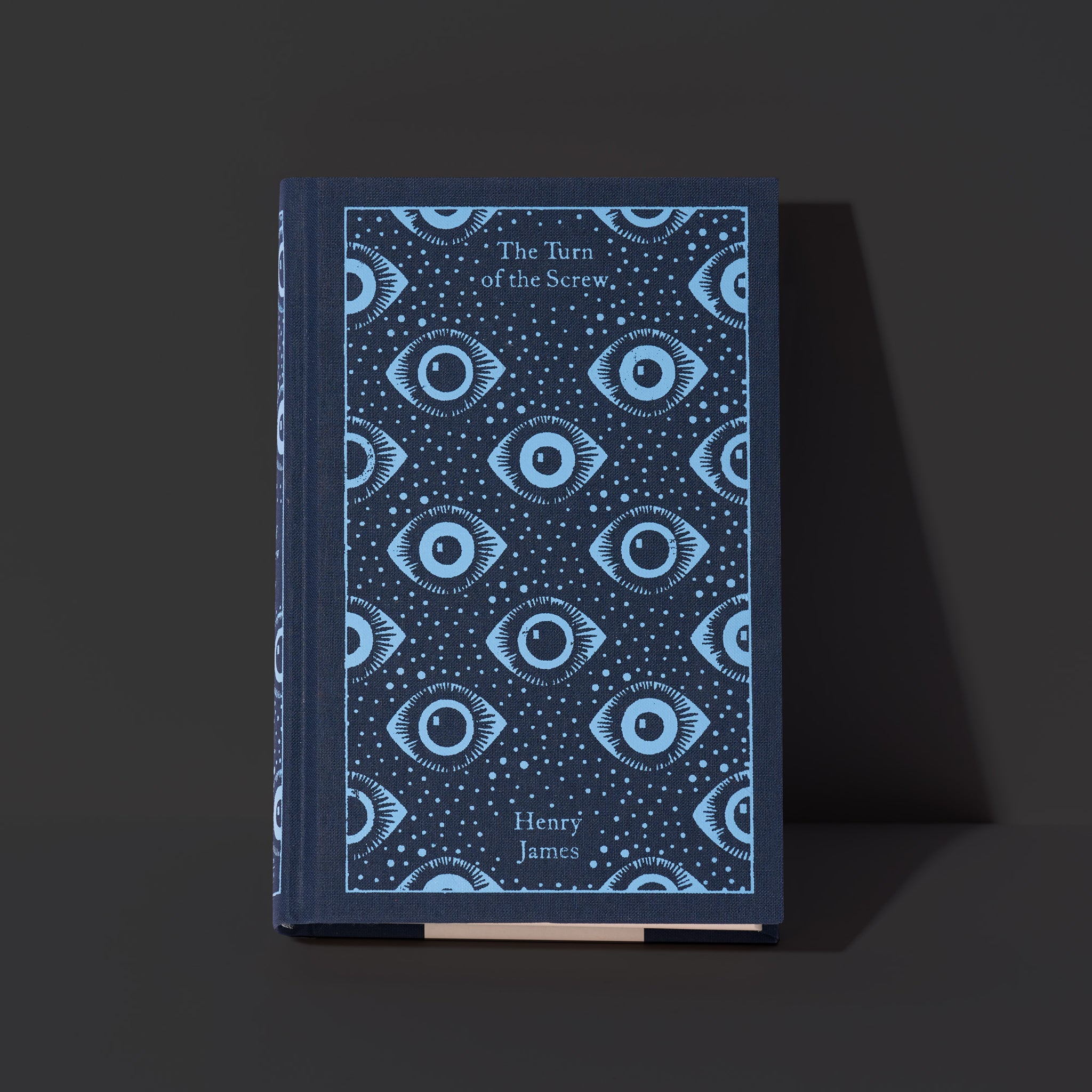 The Turn of the Screw by Henry James
The Turn of the Screw
is a gothic ghost story, described by Oscar Wilde as 'a most wonderful, lurid, poisonous little tale'. An unnamed governess lives in an isolated country house with her two charges. When the governess begins to see ghostly apparitions roaming the grounds, she does everything she can to protect the children, but the situation soon spirals out of control.
 Narnia by C.S. Lewis
Fantastic creatures, heroic deeds, epic battles in the war between good and evil, and unforgettable adventures come together in this world where magic meets reality, which has been enchanting readers of all ages for over seventy-five years. The Chronicles of Narnia has become a part of the canon of classic literature and is one of the greatest fantasy series of all time.
 The Handmaids Tale by Margaret Atwood
The Handmaid’s Tale is a novel of such power that the reader will be unable to forget its images and its forecast. Set in the near future, it describes life in what was once the United States and is now called the Republic of Gilead, a monotheocracy that has reacted to social unrest and a sharply declining birthrate by reverting to, and going beyond, the repressive intolerance of the original Puritans. The regime takes the Book of Genesis absolutely at its word, with bizarre consequences for the women and men in its population.
The story is told through the eyes of Offred, one of the unfortunate Handmaids under the new social order. In condensed but eloquent prose, by turns cool-eyed, tender, despairing, passionate, and wry, she reveals to us the dark corners behind the establishment’s calm facade, as certain tendencies now in existence are carried to their logical conclusions. The Handmaid’s Tale is funny, unexpected, horrifying, and altogether convincing. It is at once scathing satire, dire warning, and a tour de force. It is Margaret Atwood at her best.